When I started learning SEO, I used to focus mostly on keywords, headings, and content. I did not pay much attention to meta descriptions. Later, I realized that a good meta description can make a big difference in how people interact with a page in search results. It is one of those small SEO elements that can easily be ignored, but when written properly, it can help make a search result more attractive and encourage people to click.
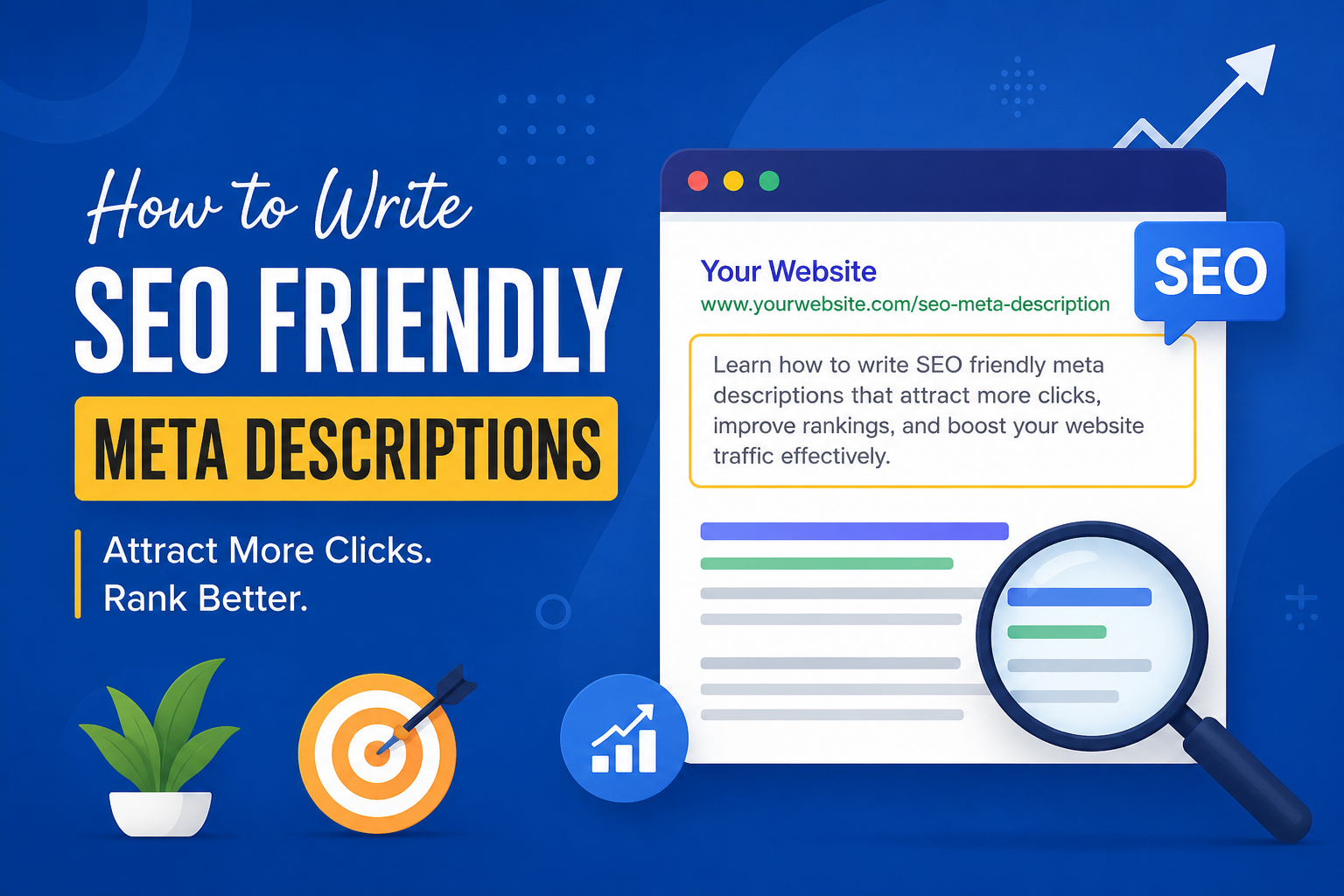
A meta description is a short summary of a webpage that can appear below the page title in search engine results. Its main purpose is to tell users what they can expect when they visit the page. I personally think of it as a small introduction to my content. If it sounds useful and natural, people have a better reason to click.
In this article, I will explain how I write SEO friendly meta descriptions and the things I consider before publishing them.
What Is a Meta Description?
A meta description is an HTML element that briefly describes the content of a webpage. Search engines may use it as the snippet shown in search results, although they can sometimes create their own description based on the page content.
For me, the easiest way to understand a meta description is to think of it as a short sales message. It does not need to sell a product. Instead, it needs to sell the value of visiting your page.
For example, if I write an article about creating strong passwords, I would not simply write something like “This article is about strong passwords.” That does not give the reader much reason to click.
A better description would explain what the reader will learn and why the information is useful.
Why Meta Descriptions Matter for SEO
Meta descriptions are not simply about adding keywords to a webpage. Their biggest value is helping searchers understand what a page offers.
When I search for something online, I usually look at the title first. After that, I quickly scan the description. If the description clearly answers my question or promises useful information, I am more likely to click.
This is why I believe a good meta description should be written for real people first.
A strong description can help improve the attractiveness of your search result and potentially increase clicks. More relevant clicks can bring additional visitors to your website.
It is also important to understand that search engines do not always display the exact meta description you write. They may replace it with text from your webpage when they believe another section better matches the search query.
Keep Your Meta Description Clear and Concise
One of the first things I focus on is keeping my description concise. Search result snippets have limited space, and overly long descriptions may be shortened.
I try to communicate the main benefit as quickly as possible. I do not try to explain the entire article in a few sentences.
For example, instead of writing:
“This article provides information about many different techniques that you can use to improve your website and understand how SEO works in detail.”
I would make it more direct:
“Learn practical SEO techniques to improve your website visibility, attract visitors, and create better search friendly content.”
The second version tells the reader more in less space.
Include the Main Keyword Naturally
I usually include the primary keyword in the meta description when it fits naturally.
If my target keyword is “SEO friendly blog titles,” I might write:
“Learn how to write SEO friendly blog titles that attract readers, communicate value, and improve your chances of getting clicks from search results.”
The keyword is present, but it does not look forced.
I do not recommend repeating the same keyword again and again. Search engines are designed to understand natural language, and readers can easily recognize keyword stuffing.
My goal is always to make the sentence sound like something a real person would write.
Focus on Search Intent
One of the most important things I consider is search intent.
Before writing a meta description, I ask myself what the person searching for this keyword actually wants.
If someone searches for “how to create a website,” they probably want a guide. If someone searches for “best laptops for students,” they may want recommendations or comparisons.
The description should match that intention.
For a tutorial, I might use words such as “learn,” “discover,” or “follow these steps.”
For a comparison article, I might use words such as “compare,” “find,” or “explore.”
When the description matches the user’s goal, the search result feels more relevant.
Make the Benefit Obvious
When I write meta descriptions, I try to answer one simple question: Why should someone click this result?
The answer should be visible in the description.
For example:
“Discover simple ways to optimize your images for SEO, improve page performance, and make your website easier to find.”
This tells the reader what they can gain.
I avoid vague descriptions because they do not communicate much value. A phrase such as “Read our complete article to learn more” can be used occasionally, but it is much weaker than explaining the actual benefit.
Use Action Words
Action words can make a description feel more useful and engaging.
Words such as “learn,” “discover,” “find,” “improve,” “create,” “understand,” and “explore” can encourage people to take the next step.
I do not try to make every description sound like an advertisement. I simply make sure that the reader understands what they can do after clicking.
For example:
“Learn how to secure your email account with practical steps for stronger passwords, two factor authentication, and safer login habits.”
This feels useful because it tells the reader exactly what the page covers.
Avoid Clickbait
I think clickbait is one of the easiest mistakes to make.
A description should create interest, but it should not promise something the article does not deliver.
If I write “The secret trick that will instantly put your website at number one,” I am creating an unrealistic expectation.
Instead, I prefer honest wording such as:
“Explore practical SEO strategies that can help improve your website visibility and attract more relevant search traffic.”
The second description is less dramatic, but it is more trustworthy.
Trust matters because people remember websites that provide what they promised.
Write a Unique Description for Every Important Page
I try not to use the same meta description across multiple pages.
Every important page on a website has a different purpose. The description should reflect that purpose.
For example, the description for a homepage should explain the website or business. A blog post description should explain the specific article. A product page should highlight the product and its benefits.
Unique descriptions also give searchers more useful information when they see different pages from the same website.
Add a Call to Action When It Makes Sense
A simple call to action can encourage users to continue.
Examples include:
“Learn how to get started.”
“Discover practical SEO tips.”
“Find out which strategy works best.”
“Explore the complete guide.”
I do not add a call to action just for the sake of adding one. If the description already communicates the value clearly, that may be enough.
The call to action should feel natural rather than forced.
Avoid Keyword Stuffing
Keyword stuffing can make a description difficult to read.
For example, writing “SEO meta description, SEO friendly meta description, best SEO meta description, SEO description tips” does not sound like normal language.
I would rather write a useful sentence that includes the main keyword naturally.
A good meta description should sound like it was written for a person, not a search engine.
Match the Description With the Page Content
This is something I always check before publishing.
If my meta description promises five practical tips, the article should actually provide those tips. If I say the article is a complete beginner guide, the content should be suitable for beginners.
A mismatch between the description and the article can disappoint visitors.
I believe the best SEO strategy is to create a consistent experience from the search result to the actual page.
Keep the Language Simple
I prefer simple language in meta descriptions.
There is very little space, so complicated sentences do not help. I use words that my target reader can understand quickly.
For example:
“Learn simple ways to improve your website SEO and attract more visitors from search engines.”
This is easier to understand than a complicated sentence filled with technical terminology.
Simple writing can also make the description easier to scan.
Check How Your Description Looks
After writing a meta description, I like to preview it if my SEO plugin or website tool provides that option.
This helps me see whether the text is likely to be cut off and whether the important information appears early enough.
I also check how the title and description work together.
A strong title combined with a useful description can create a much more appealing search result.
Common Meta Description Mistakes
There are several mistakes I try to avoid.
The first is writing no description at all for important pages.
The second is using the same description everywhere.
The third is stuffing keywords into every sentence.
Another mistake is making the description too vague.
I also avoid misleading claims, excessive punctuation, and unnecessary repetition.
Most importantly, I do not treat the meta description as a place to write random keywords. It should communicate a clear reason to visit the page.
My Simple Formula for Writing Meta Descriptions
When I am creating a new meta description, I usually follow a simple process.
First, I identify the main topic of the page.
Second, I understand what the reader is searching for.
Third, I include the main keyword naturally.
Fourth, I explain the main benefit.
Fifth, I add a natural action phrase if appropriate.
Finally, I read the description as if I were the person searching on Google.
If it makes me curious and clearly explains what I will get from the page, I consider it ready.
Final Thoughts
Writing SEO friendly meta descriptions is not complicated, but it does require a little thought. In my experience, the best descriptions are simple, honest, useful, and written for people rather than search engines.
I do not try to fill every available character with keywords. Instead, I focus on explaining what the page offers and why someone should care.
A good meta description should support the page title, match search intent, include the main keyword naturally, and give the reader a clear reason to click.
I also keep in mind that search engines may choose to display different text from the page. That is completely normal. My job is to provide a helpful description that gives search engines a strong option while also making the result appealing to real users.
If you are improving your website SEO, I recommend treating meta descriptions as part of your overall content strategy. They may be small pieces of text, but they can play an important role in how your pages are presented in search results.
For me, the best rule is simple: write a description that I would personally want to click after seeing it in a search result. If it is clear, relevant, natural, and useful, you are already on the right path.