When I started thinking about blogging, one of the biggest questions I had was simple: what should I write about? I quickly realized that writing a good article is not enough. If nobody is searching for the topic, even a well written post can struggle to get visitors.
In my opinion, finding blog topics that people actually search for is one of the most important parts of blogging. It helps me create useful content, attract the right audience, and build a website that can grow over time.
The good thing is that I do not need to guess what people want to read. There are several simple ways to discover topics that people are already searching for online. In this article, I will share the methods I use to find useful blog topics with real search interest.
Start With Your Main Niche
The first thing I do is clearly define my blog niche. A niche gives me a direction and makes it easier to find relevant topics.
For example, if my blog is about blogging, I can write about starting a blog, writing articles, SEO, keyword research, website traffic, content planning, and monetization.
If I try to write about everything, it becomes difficult to build a clear audience. I prefer to start with one main subject and then explore smaller topics inside it.
I also think about what problems people have within that niche. Problems often turn into excellent blog topics because people naturally use search engines when they need answers.
For example, someone interested in blogging might search for “how to start a blog with no experience” or “how to find blog topics.” These are specific problems that can become useful articles.
Use Google Search Suggestions
One of my favorite free methods for finding blog ideas is Google itself.
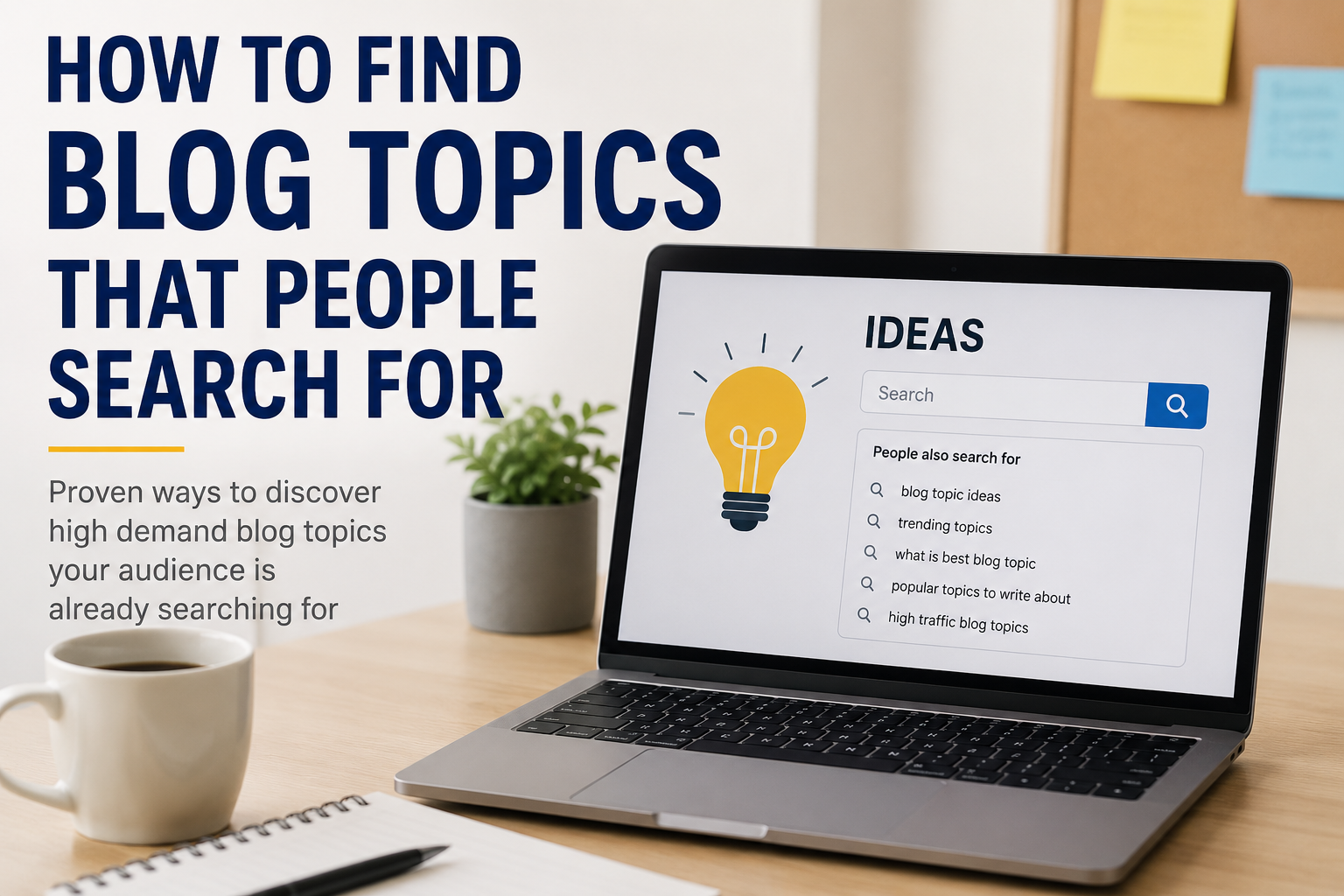
I simply type a broad phrase into the search box and look at the suggestions that appear. These suggestions are based on searches people commonly make.
For example, if I type “blogging tips,” I may see suggestions related to beginners, writing, SEO, traffic, and other subjects.
I can then take those suggestions and turn them into more specific article ideas.
Another useful method is to type a question into Google and look at the related questions section. These questions can show me what people want to know about a subject.
I find this method useful because it does not require an expensive keyword research tool. It also helps me understand how people naturally phrase their searches.
Pay Attention to Long Tail Keywords
I believe beginners should pay special attention to long tail keywords.
A long tail keyword is usually a more specific search phrase rather than a broad keyword. For example, “blogging” is very broad, while “how to start a blog for beginners” is much more specific.
Broad keywords can have a lot of competition. Ranking for them may take a long time, especially when a website is new.
Specific keywords can sometimes be easier to target because the search intent is clearer.
For example, instead of writing an article simply titled “Blogging,” I might create articles around topics such as “how to write your first blog post” or “how often should I publish blog posts.”
These topics are easier to understand and allow me to create content that directly answers a particular question.
Look at People Also Ask Questions
Google’s People Also Ask section can give me many useful ideas.
When I search for a topic, I often see questions related to the main search. These questions can reveal what people want to know next.
For example, if I search for blogging topics, I might find questions about choosing a niche, getting visitors, writing content, keyword research, and publishing frequency.
I can take these questions and create separate articles around them.
The biggest advantage is that I am not creating random topics. I am starting with questions that are already connected to what people are searching for.
Use Keyword Research Tools
Keyword research tools can make the process much easier.
There are free and paid tools available that provide information such as estimated search volume, keyword difficulty, related keywords, and search trends.
I do not focus only on search volume. This is something I learned after spending time researching keywords.
A keyword with thousands of searches may look attractive, but it could also have extremely strong competition. A smaller keyword may bring fewer visitors but could be much easier for a new website to target.
I prefer to look for a balance between search interest, competition, and relevance.
Most importantly, the keyword should fit my website and provide a useful topic for my audience.
Study Your Competitors
Another method I like is researching websites that are already successful in my niche.
I look at the subjects they cover and identify patterns. If several websites are writing about a particular subject, that can indicate that the topic has strong interest.
However, I do not simply copy their articles.
Instead, I look for gaps. Maybe an existing article is outdated, too short, difficult to understand, or missing practical examples.
That gives me an opportunity to create something more useful.
For example, if I find an article explaining how to start a blog but it only discusses technical setup, I could create a beginner friendly guide that also explains choosing a topic, planning content, finding keywords, and getting the first readers.
Check Online Communities
I also find blog ideas by paying attention to online communities.
People ask questions every day on forums, social media platforms, discussion groups, and community websites. These conversations can reveal real problems and interests.
If I repeatedly see people asking the same question, I consider it a possible blog topic.
This method is especially useful because the language people use in conversations can be different from formal keyword phrases.
For example, someone may ask, “Why is nobody reading my blog?” That simple question could inspire an article about common reasons blogs receive little traffic.
Real questions often make better article ideas because they represent actual problems.
Look for Problems Instead of Just Keywords
One mistake I try to avoid is thinking only about keywords.
A keyword is useful, but the problem behind the keyword is even more important.
When someone searches “how to get blog traffic,” they are not really interested in the words themselves. They want more people to visit their website.
When someone searches “how to write a blog post,” they probably want guidance on creating an article.
Understanding the reason behind the search helps me create better content.
Before writing an article, I ask myself what the reader wants to accomplish. Then I make sure the article helps them achieve that goal.
Check Search Trends
Search trends can also help me find topics that are becoming popular.
Some subjects remain popular for years, while others become popular for a short period.
I like having a mixture of both.
Evergreen topics can continue attracting visitors for a long time. Trending topics can sometimes bring faster attention while the subject is popular.
For example, a basic blogging guide can remain useful for years, while an article about a new blogging tool may become popular when the tool starts gaining attention.
I think a good content strategy should include both types.
Turn One Topic Into Many Articles
Another strategy I use is building topic clusters.
Instead of writing one huge article about an entire subject, I break the subject into smaller questions.
For example, if my main topic is blogging, I can create separate articles about choosing a blog topic, writing the first article, finding keywords, creating a content schedule, improving SEO, and increasing traffic.
This gives me many related articles without moving away from my main niche.
It also helps readers find more useful information on the same website.
Check Search Intent Before Writing
Before choosing a topic, I like to search the exact phrase and look at the results.
This helps me understand what type of content Google considers useful for that search.
If most results are beginner guides, I know that people are probably looking for educational content.
If the results are comparisons, reviews, or lists, then I can understand that the search intent is different.
Matching search intent is important because an article can target the right keyword but still fail to satisfy the reader.
My goal is not simply to include a keyword. My goal is to answer the reason behind the search.
Keep a List of Blog Ideas
I recommend keeping a running list of potential topics.
Whenever I find an interesting question, keyword, trend, or content gap, I add it to my list.
This saves me from starting from zero every time I want to publish something.
I can organize the ideas into categories and later choose topics based on my content goals.
I also like marking topics as beginner, intermediate, or advanced. This helps me create a balanced content plan.
Focus on Helping the Reader
For me, the most important rule is to create content for people first.
Search traffic is valuable, but traffic alone does not make a successful blog.
If a visitor arrives at my article and cannot find a useful answer, they may leave immediately.
That is why I focus on providing clear explanations, practical advice, examples, and honest opinions.
I believe useful content has a better chance of earning trust and bringing readers back.
Final Thoughts
Finding blog topics that people search for does not have to be complicated.
I start with my niche, research questions, check Google suggestions, explore long tail keywords, study competitors, look at online discussions, and pay attention to trends.
I also make sure that every topic has a clear purpose and answers a real question.
In my experience, the best blog topics are usually found where three things meet: people are searching for the subject, the topic is relevant to my website, and I can provide something genuinely useful.
I would rather publish a helpful article targeting a specific question than write a general article simply because a keyword has a large search volume.
If I consistently research what people want, create useful answers, and improve my content over time, I have a much better chance of building a blog that attracts readers naturally.
Blogging is not just about finding something to write. It is about finding something people need to know and then explaining it in a way that makes their lives easier.