
When I first started learning about SEO, I thought keyword research was something that required expensive software. Many SEO websites and YouTube videos talk about premium tools that can cost a lot of money every month. Because of this, beginners often feel that they cannot do proper keyword research unless they pay for a subscription.
In my experience, this is not completely true. Paid SEO tools can certainly make keyword research faster and give you more data, but they are not the only way to discover useful keywords. With some patience, careful searching, and a little common sense, you can find plenty of valuable keywords for your blog without spending a lot of money.
The main thing I have learned is that good keyword research is not only about finding a keyword with a high search volume. It is about understanding what people are searching for, why they are searching for it, and whether your article can genuinely answer their question.
Start With Your Main Topic
The easiest way to find keywords is to begin with the topic you already want to write about. Suppose your website is about cybersecurity. Your main topic could be online security, password safety, malware, phishing, or privacy.
Instead of immediately trying to find hundreds of keywords, I prefer to write down simple phrases that people might use when searching for information.
For example, if your topic is password security, you might think of phrases such as how to create a strong password, how to protect passwords, password security tips, best password practices, and how to keep online accounts safe.
These simple ideas give you a starting point. You do not need perfect keyword data at this stage. You are simply trying to understand the different questions and problems surrounding your topic.
Use Google Search Suggestions
One of my favorite free methods is using Google itself. When you type a phrase into Google, the search engine often provides suggestions automatically.
For example, if you type how to stay safe online, Google may suggest phrases related to online safety for beginners, online privacy, protecting personal information, or avoiding scams.
These suggestions are useful because they come from real searches. They can help you discover longer and more specific phrases that you may not have thought about yourself.
I usually take these suggestions and write them down in a simple document or spreadsheet. After collecting several ideas, I look for phrases that are closely related but have slightly different search intentions.
Check Related Searches
Google also provides related searches near the bottom of many search results pages. These suggestions can be extremely helpful when you are looking for additional keyword ideas.
Suppose you search for how to protect your computer from viruses. After looking through the results, you may find related searches about computer virus prevention, malware protection, antivirus tips, and safe browsing habits.
I use these related searches as inspiration rather than blindly choosing every phrase. The goal is to understand the wider topic and discover questions that people may have.
This method is completely free and can produce many useful ideas if you spend enough time exploring different searches.
Look at the People Also Ask Section
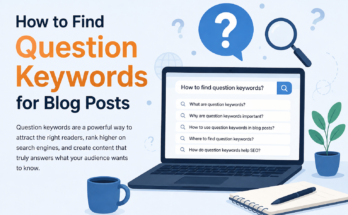
Another free source of keyword ideas is the People Also Ask section in Google. These questions are especially useful for blog writers because they show the type of information users want to understand.
For example, if you search for internet security, you may see questions such as what internet security means, why internet security is important, how internet security works, and how people can protect themselves online.
Each question can potentially become a section of your article or even a separate article.
I find this method particularly useful because it helps me create content around actual questions instead of writing something that only sounds interesting to me.
Use YouTube Search
YouTube is another place where I find keyword ideas without paying for SEO software. The process is very similar to Google.
Start typing your main topic into the YouTube search box and look at the suggestions that appear.
If your topic is blogging, for example, you might see suggestions related to starting a blog, getting blog traffic, writing blog posts, finding keywords, or making money from blogging.
These suggestions can reveal popular topics and questions. Even if you are writing a traditional website article rather than making videos, YouTube can still give you useful content ideas.
Explore Reddit and Online Communities
I also recommend looking at online communities where people discuss your topic. Reddit, forums, Facebook groups, and question based websites can be useful sources of ideas.
The important thing is not to copy what people write. Instead, pay attention to the questions they repeatedly ask.
Imagine you are writing about blogging and notice several people asking why their new blog is not getting visitors. That tells you there is a real problem people want solved.
You could turn that problem into an article such as why new blogs get no traffic or how to get your first visitors from Google.
This approach can help you find keywords based on real problems rather than relying entirely on keyword numbers.
Study Google Search Results
Once I find a possible keyword, I like to search for it and study the results carefully.
Look at the titles of the pages appearing on the first page. Pay attention to the topics they cover, the questions they answer, and the type of content Google is ranking.
You should not copy these articles. Instead, use them to understand the search intent.
For example, if most results for a keyword are beginner guides, then a complicated technical article may not satisfy the searcher. If the results are mostly tutorials, your article should probably provide practical steps.
This research can be done manually and does not require expensive software.
Find Long Tail Keywords
Long tail keywords are another excellent opportunity for beginners. These are usually longer and more specific search phrases.
Instead of targeting a broad phrase such as SEO, you could target something more specific such as how to find keywords for a new blog without paid tools.
Broad keywords can have enormous competition. A specific keyword may have fewer searches, but the people searching for it can be much more interested in your content.
I personally prefer creating useful articles around specific questions rather than chasing extremely broad keywords. A smaller amount of highly relevant traffic can be more valuable than a large amount of visitors who are not interested in what you offer.
Use Free Keyword Tools Carefully
You do not have to completely avoid keyword tools. There are free versions of several SEO and keyword research platforms that can provide useful information.
The problem is that beginners sometimes become obsessed with search volume, keyword difficulty, and other numbers.
I believe these numbers should be treated as guidance rather than absolute truth. A keyword showing a certain search volume does not guarantee that your article will receive that many visitors.
Instead of relying on one number, look at the overall opportunity. Is the topic relevant to your website? Can you provide a better answer? Does the keyword match what your audience wants?
These questions are often more important than a single keyword score.
Check Search Intent
Keyword research becomes much more powerful when you understand search intent.
Search intent simply means understanding what someone actually wants when they type a phrase into a search engine.
For example, someone searching for what is cybersecurity probably wants an explanation. Someone searching for best cybersecurity software may be comparing products. Someone searching for how to protect my computer from malware wants practical instructions.
If you understand the intent, you can create an article that directly answers the user’s need.
This is one area where I believe common sense can be just as valuable as expensive SEO software.
Look for Low Competition Opportunities
When choosing keywords, I try to find topics where large websites are not completely dominating the results.
This does not mean you should only target keywords with zero competition. Almost every useful keyword has some competition.
Instead, look for specific topics where the current results are outdated, incomplete, poorly explained, or not very useful.
If you can create a clearer and more helpful article, you have a better chance of competing.
Create a Simple Keyword List
After researching, I recommend creating a simple spreadsheet. You do not need complicated software.
I usually organize keywords into columns such as keyword, search intent, topic, article idea, and priority.
You can then group similar keywords together. Several closely related phrases may belong in one comprehensive article instead of five separate articles.
This keeps your website organized and prevents you from publishing multiple articles that compete with each other.

Do Not Ignore Your Own Website
Once your website starts receiving visitors, your own data becomes an excellent source of keyword ideas.
Look at the queries that already bring people to your pages. Sometimes you will discover that visitors are finding your article through phrases you never specifically targeted.
Those phrases can inspire new articles, additional sections, or updates to existing content.
This is one of the best parts of SEO because your website itself can gradually teach you what your audience wants.
Focus on Helping People
In my opinion, the biggest mistake beginners make is treating keyword research as a numbers game.
It is easy to spend hours searching for the perfect keyword while forgetting about the actual reader.
A keyword is simply a phrase. Behind that phrase is a real person looking for information, an answer, a solution, or advice.
If your article genuinely solves that person’s problem, you are already doing something valuable.
I would rather write a detailed and useful article for a specific audience than create a thin article simply because a keyword tool says a phrase has high search volume.
Final Thoughts
Finding keywords without expensive SEO tools is absolutely possible. Google suggestions, related searches, People Also Ask, YouTube, online communities, search results, free tools, and your own website data can provide a huge number of keyword ideas.
The most important thing is to approach keyword research with curiosity. Try to understand what people want, what questions they are asking, and what problems they are trying to solve.
You do not need an expensive monthly subscription to start. A browser, a spreadsheet, some patience, and a willingness to research can take you surprisingly far.
As your website grows, you can always invest in professional SEO tools later if you need more advanced data. But when you are starting out, I believe learning how to research manually is actually a valuable skill.
The goal should not be to find the most impressive keyword. The goal should be to find a useful topic, understand the person searching for it, and create content that deserves to be found.