
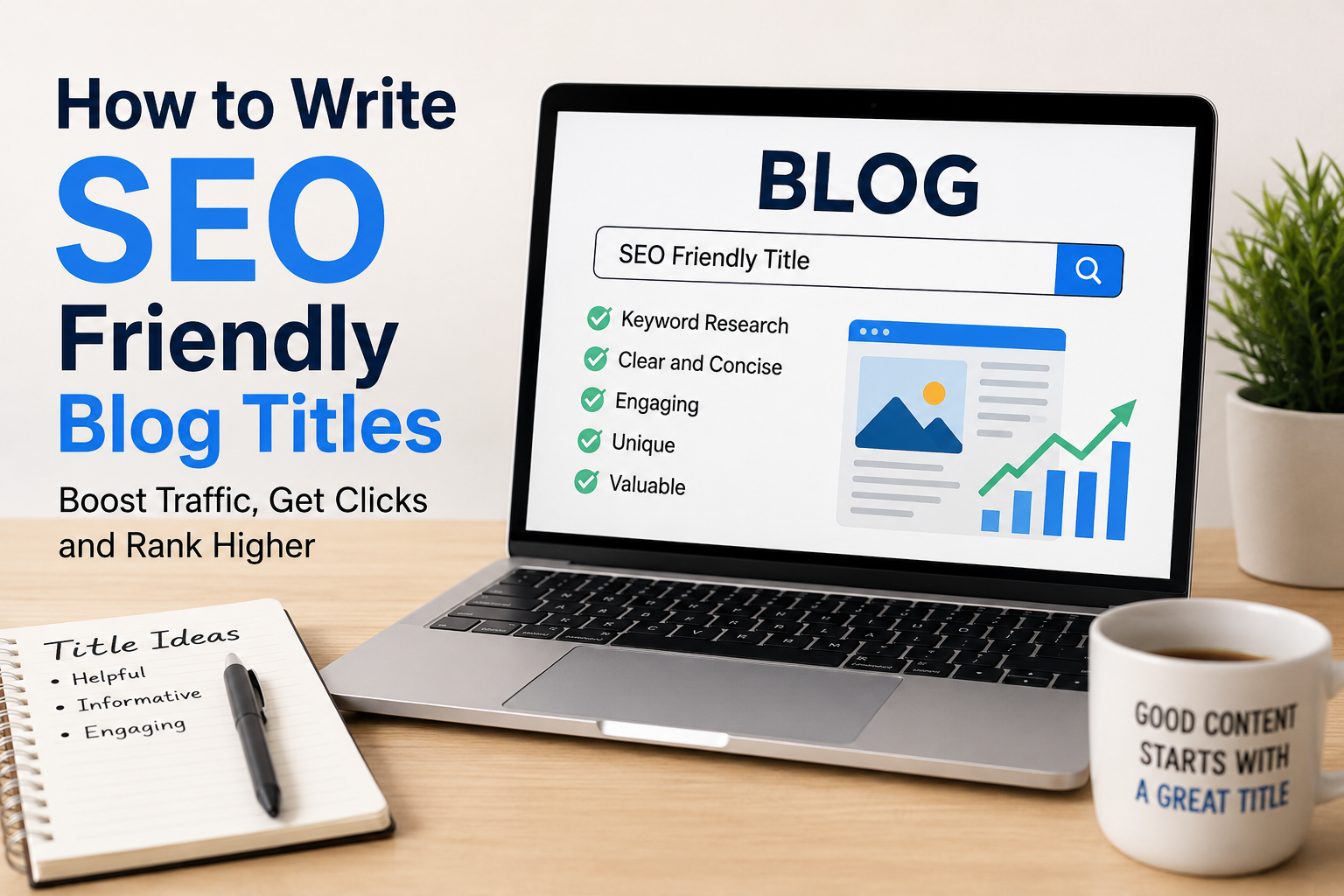
When I started learning about blogging and SEO, I thought writing a good blog title was simply about making it sound interesting. Later, I realized that a title has a much bigger job. It needs to tell readers what the article is about, attract attention, and also help search engines understand the topic.
A good SEO friendly blog title can make a noticeable difference in how people interact with your content. Even if you write an excellent article, people may ignore it if the title does not give them a reason to click.
In my opinion, the best blog titles are simple, natural, useful, and honest. They should make readers curious without making false promises. In this article, I will explain how I approach writing SEO friendly blog titles and what I have learned about creating titles that work for both readers and search engines.
Understand What Your Article Is Really About
Before writing a title, I first try to understand the main purpose of the article. I ask myself one simple question: What will the reader learn after reading this post?
For example, if the article explains how beginners can protect their online accounts, a title such as “Online Security Tips” may be too general. A more useful title could be “How to Protect Your Online Accounts From Common Security Threats.”
The second title gives readers a much clearer idea of what they will find inside the article.
I believe this is one of the most important parts of SEO title writing. Your title should accurately represent your content. Do not create a title only because you think it will get clicks. If the article does not deliver what the title promises, visitors may leave quickly and lose trust in your website.
Find the Main Keyword
Keywords are another important part of an SEO friendly title. Before I write a title, I usually think about the phrase people might type into a search engine when looking for my article.
Suppose I am writing about creating strong passwords. The main keyword might be “how to create a strong password.” I can naturally include that phrase in my title.
For example:
“How to Create a Strong Password That Is Easy to Remember”
This title is straightforward. It includes the main topic and also tells readers that the article will solve a specific problem.
I do not recommend forcing keywords into titles. Search engines are becoming better at understanding natural language, so a title should sound like something a real person would write.
Put the Main Keyword Near the Beginning
When possible, I like to place the main keyword near the beginning of the title. This makes the subject immediately clear.
For example, instead of writing:
“Everything You Should Know Before You Start Learning About Cybersecurity”
I might write:
“Cybersecurity for Beginners: Everything You Need to Know”
The second version quickly communicates the topic.
However, I would not sacrifice readability just to move a keyword to the first position. A natural title is more important than following a rigid formula.
Keep Your Title Clear and Specific
One mistake I often see in blog titles is being too vague.
A title such as “Tips for Success” does not tell me much. Success in what? Blogging? Business? Fitness? Education?
A better title gives readers context.
For example:
“10 Practical SEO Tips for New Bloggers”
Now I know the topic, audience, and type of information I can expect.
Specific titles can also attract the right visitors. Someone searching for SEO advice for a new blog is more likely to click a title that directly speaks to their situation.
Make the Title Interesting
SEO is important, but I believe we should never forget the reader.
Your title needs to create enough interest for someone to stop scrolling and click. This does not mean using exaggerated claims. You can make a title interesting by focusing on a benefit, problem, question, or useful solution.
For example:
“How to Write Blog Posts That Actually Get Read”
This title creates curiosity because many bloggers want more people to read their content.
Another example is:
“7 Simple Ways to Make Your Website More Secure”
The word “simple” suggests that the information may be easy for beginners to understand.
The key is to create curiosity while remaining honest.
Use Numbers When They Make Sense
Numbered titles are popular because they make content easier to understand at a glance.
For example:
“10 SEO Mistakes New Bloggers Should Avoid”
This immediately tells readers that they will get ten specific points.
I often use numbers when an article naturally contains a list of tips, mistakes, tools, or strategies. However, I would not add a number just because it looks good. If your article has seven useful tips, say seven. There is no need to force it into ten.
Use Words That Communicate Value
Certain words can help readers understand the benefit of clicking on your article.
Words such as “simple,” “practical,” “complete,” “beginner,” “effective,” and “easy” can be useful when they genuinely describe the content.
For example:
“Simple SEO Tips for Beginners”
is clearer than:
“SEO Tips”
The first title tells readers that the content is designed to be simple and beginner friendly.
Still, I believe these words should be used naturally. Adding too many attention grabbing words can make a title look exaggerated.
Match Search Intent
Search intent means understanding what a person actually wants when they search for something.
If someone searches “how to start a blog,” they probably want instructions. A title such as “How to Start a Blog Step by Step” matches that intent.
If someone searches “best free SEO tools,” they probably want recommendations. A suitable title could be:
“Best Free SEO Tools for Bloggers and Beginners”
When your title matches the searcher’s goal, you have a better chance of attracting people who are genuinely interested in your content.
Avoid Clickbait Titles
I personally think clickbait is one of the easiest ways to lose reader trust.
A title such as “You Won’t Believe What Happened Next” might create curiosity, but it does not tell the reader what the article is about.
A useful SEO title should give enough information for people to make an informed decision about clicking.
Instead of hiding the information, I prefer titles that clearly explain the benefit.
For example:
“How to Improve Your Blog Traffic With Better SEO”
This is much more useful than a mysterious clickbait title.
Keep Titles Reasonably Short
Very long titles can become difficult to read, especially in search results and on mobile devices.
I try to communicate the main idea using as few words as possible without making the title confusing.
For example:
“How to Write SEO Friendly Blog Titles That Get More Clicks”
This is specific without becoming unnecessarily long.
There is no magic number of characters that guarantees rankings. Search engines may display titles differently depending on the device and search result. Instead of obsessing over an exact character count, I focus on making the most important information appear early and keeping the title easy to understand.
Write for Humans First
One lesson I have learned from blogging is that SEO should never make your writing sound robotic.
Sometimes bloggers try to repeat the same keyword several times in one title. This usually makes the title awkward.
For example:
“SEO Blog Titles: Best SEO Blog Titles for SEO Friendly Blog Titles”
Nobody wants to read a title like that.
A better option is:
“How to Write SEO Friendly Blog Titles”
The keyword appears naturally and the title is easy to understand.
Search engines want to provide useful results to users, so writing naturally should always be a priority.
Add a Clear Benefit
When I write a title, I like to ask myself what benefit the reader will get.
Compare these two titles:
“Blog Title Writing”
“How to Write Blog Titles That Attract More Readers”
The second title is more appealing because it explains the potential benefit.
Benefits can be related to saving time, solving a problem, learning something new, improving a skill, or getting better results.
Use Questions When Appropriate
Questions can work well when they match what people are searching for.
Examples include:
“What Makes a Blog Title SEO Friendly?”
“How Do I Choose the Right Keyword for a Blog Title?”
“Why Are My Blog Posts Not Getting Traffic?”
Question based titles can feel natural and conversational. I especially like using them when the article answers a specific problem.

Make Every Title Unique
If you have many articles on your website, avoid using almost identical titles.
For example, having several posts called “SEO Tips for Beginners” can make your content look repetitive.
Instead, make each title focus on a different topic:
“SEO Tips for Beginners”
“SEO Keyword Research for New Bloggers”
“How to Write SEO Friendly Blog Titles”
“Common SEO Mistakes New Bloggers Make”
Unique titles make it easier for readers and search engines to understand the purpose of each page.
Check Your Title Before Publishing
Before publishing an article, I like to read the title one more time and imagine that I am seeing it in a search result.
I ask myself a few questions.
Does the title clearly explain the topic?
Does it include the main keyword naturally?
Would I understand the benefit of reading the article?
Does it sound interesting without being clickbait?
Does it accurately describe the content?
Is it easy to read on a small screen?
If the answer to these questions is yes, I am usually comfortable publishing the article.
Final Thoughts
Writing SEO friendly blog titles is not about finding a secret formula that guarantees rankings. In my experience, it is more about understanding readers and communicating clearly.
A strong title tells people what the article is about, uses relevant words naturally, matches search intent, and gives readers a reason to continue.
I believe the best approach is to write the title for a real person first and then make sure it is clear enough for search engines to understand. Do not fill your title with keywords, do not make unrealistic promises, and do not make it unnecessarily complicated.
A good blog title may contain only a few words, but those words can have a big influence on whether someone notices your article.
So before publishing your next blog post, spend a little extra time on the title. Try different versions, think about what your audience wants, and choose the one that communicates your article most clearly.
In my opinion, when a title is useful, honest, specific, and interesting, it has the best chance of attracting the right readers and helping your content perform better in search.
