
Starting a blog can feel difficult when you have never created a website, written an article, or worked with SEO before. I remember that when someone talks about blogging, there are many things that can make a beginner feel confused. You hear words like domain, hosting, keywords, SEO, WordPress, traffic, and monetization, and it can seem like you need to be an expert before you even begin.
The good news is that you do not need previous experience to start a blog. You can learn everything step by step while working on your website. In my opinion, the most important thing is to start with a simple plan and remain consistent.
In this article, I will explain how I would start a blog if I had no experience today.
Choose a Topic You Actually Understand
The first thing I would do is choose a topic for my blog. I would not try to write about everything because a website covering too many unrelated subjects can become difficult to manage.
Think about the subjects you enjoy learning about. You could choose technology, blogging, personal finance, cybersecurity, gaming, education, cooking, travel, fitness, home improvement, or another useful subject.
You do not have to be an expert. If you can research a topic carefully and explain what you learn in simple language, you can create useful content.
I would also choose a topic that has enough potential article ideas. Before creating the website, I would write down at least 30 possible article topics. If I can easily find 30 useful ideas, that tells me the niche has enough room for future content.
Decide Who You Want to Help
After choosing a topic, I would think about my target reader.
For example, instead of creating a general technology blog, I might create a blog specifically for people who want simple technology advice. Instead of writing about all areas of finance, I could focus on basic money management for beginners.
This makes content creation easier because I know who I am writing for.
I would ask myself one simple question:
What problem can my blog help people solve?
If your articles answer real questions, your website has a better chance of becoming useful to readers.
Choose a Simple Blog Name
Your blog name does not need to be complicated. I would choose something short, easy to remember, and related to the website topic if possible.
Try to avoid names that are difficult to spell. If someone hears your website name once, they should have a reasonable chance of remembering it later.
I would also check whether the domain name is available before becoming attached to a particular name.
A simple name can be much better than a clever name that people cannot remember or spell correctly.
Buy a Domain and Hosting
Once I have chosen the name, the next step is getting a domain and hosting.
A domain is the address people use to visit your website. Hosting is where the files and content of your website are stored.
There are many hosting companies available, so beginners should compare their features, support, performance, storage, and pricing before choosing one.
I would not spend too much money at the beginning. My goal would be to create a reliable website without paying for unnecessary features.
Use WordPress
For a beginner, I would personally consider WordPress because it makes website management much easier.
You do not need to know programming to publish articles, add images, create categories, and manage basic website pages.
After installing WordPress, I would choose a clean and responsive theme. I would avoid themes with too many animations, unnecessary features, or distracting designs.
A blog should be easy to navigate. Readers should quickly understand what the website is about and find the information they need.
Create Important Website Pages
Before publishing many articles, I would create the basic pages that make a website look complete and trustworthy.
These can include an About Us page, Contact Us page, Privacy Policy, Terms and Conditions, and Disclaimer where appropriate.
The About page can explain what the website is about and why you created it.
The Contact page gives readers a way to communicate with you.
Privacy information is also important because websites may collect information through forms, analytics, cookies, or advertising services.
I would make sure these pages accurately describe how my website works rather than simply copying another website.
Research Your Keywords
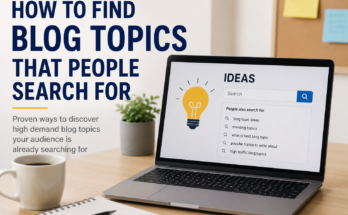
One of the most important parts of blogging is understanding what people are searching for.
A keyword is simply a word or phrase that people type into a search engine.
For example, if your blog is about blogging, possible topics could include how to start a blog, blogging tips for beginners, how to write a blog post, and how to get traffic to a new blog.
As a beginner, I would focus on specific questions and longer search phrases instead of immediately targeting extremely broad keywords.
Longer and more specific searches can sometimes be easier to target because the competition may be lower and the searcher’s intention can be clearer.
I would never write an article only because a keyword looks popular. The article should actually answer the question behind that keyword.
Start Writing Helpful Articles
Once the basic website is ready, I would start creating content.
My first goal would not be to publish hundreds of articles. I would focus on creating genuinely useful articles that answer specific questions.
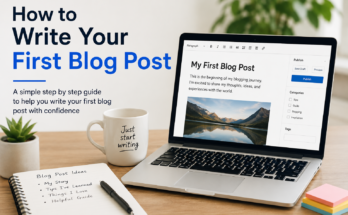
For example, if my blog is about blogging, I could publish an article about choosing a blog niche, another about writing the first blog post, and another about basic SEO for beginners.
Each article should have a clear purpose.
I would use headings to organize the information and keep paragraphs reasonably short. I would also explain complicated concepts in simple language.
I believe beginners often make the mistake of trying to sound extremely professional. I would rather write naturally and clearly because readers usually want useful information, not complicated vocabulary.
Learn Basic SEO
You do not need to become an SEO expert before starting a blog.
I would begin by learning the basics.
SEO means Search Engine Optimization. It involves improving your website and content so search engines can understand it and potentially show it to people searching for related information.
Basic SEO includes writing useful content, creating clear titles, using appropriate headings, understanding search intent, linking related articles, improving website speed, and making the website easy to use on mobile devices.
I would focus on helping readers first and search engines second.
If an article is genuinely useful, well organized, and relevant to the searcher’s question, you have a much stronger foundation.
Use Images Carefully
Images can make a blog post easier to read and more attractive.
I would use relevant images that actually support the article rather than adding random pictures simply to fill space.
For a WordPress website, I would also pay attention to image size because very large images can slow down a website.
I would use appropriate file names and alternative text when needed. Images should also be legally usable. I would avoid copying random images from Google Images.
Publish Consistently
Consistency is more important than trying to publish a huge number of articles in a short period.
If I were starting from zero, I would create a realistic publishing schedule.
For example, I might publish two or three quality articles every week. If that is too much, I would start with one article per week and increase the schedule later.
The important thing is to create a routine that I can maintain.
Blogging usually takes time. A new website may not receive significant traffic immediately. That does not necessarily mean the website is failing.
Promote Your Content
Publishing an article does not guarantee that people will find it.
I would promote my useful content through appropriate channels.
Depending on the niche, this could include social media, online communities, email newsletters, forums, or other legitimate platforms where sharing the information is allowed.
I would avoid spamming links everywhere. Instead, I would participate in conversations and share an article when it genuinely helps answer someone’s question.
Building an audience takes patience, but useful content gives you something valuable to share.
Track Your Progress
After publishing content, I would monitor how the website performs.
I would look at which articles receive visitors, which topics attract attention, and which pages need improvement.
If one article performs well, I would look for related questions that could become additional articles.
For example, if an article about beginner blogging receives good traffic, I might create related articles about blog design, content planning, keyword research, and SEO basics.
This creates a connected collection of useful information instead of isolated articles.
Do Not Expect Instant Results
This is probably the most important lesson I would give to someone starting a blog.
Do not expect overnight success.
A blog can take months to build authority, content, and an audience. Some articles may perform poorly while others may unexpectedly become popular.
Instead of checking traffic every hour, I would focus on improving the website.
Every article is an opportunity to learn something. Every mistake can teach you what to do differently next time.

Think About Monetization Later
Once your website has useful content and regular visitors, you can explore different monetization methods.
Depending on your niche and audience, options may include display advertising, affiliate marketing, sponsored content, digital products, memberships, or services.
I would not make money the only goal during the first few weeks.
A website without useful content has little value to readers. Build the foundation first and think about monetization as the website develops.
If you plan to use advertising, I would also make sure the website follows the advertising platform’s current policies and provides genuine value to visitors.
Keep Learning
The blogging world changes regularly. Search engines change, social media platforms evolve, and new tools appear.
I would spend some time every week learning something new about writing, SEO, website performance, content strategy, or my chosen niche.
You do not need to learn everything at once.
Learn one thing, apply it, observe the result, and then move to the next thing.
That approach is much less overwhelming than trying to become an expert in blogging overnight.
Final Thoughts
Starting a blog with no experience is completely possible. You do not need to know everything before you begin.
If I were starting today, I would choose one clear topic, understand my audience, purchase a simple domain and hosting plan, install WordPress, create the important website pages, and start publishing useful articles.
I would learn SEO gradually, use relevant images, promote my content naturally, and track what works.
Most importantly, I would stay patient.
Your first article probably will not be perfect. Your first website design may not be perfect either. That is completely normal. Blogging is something you improve through practice.
The biggest mistake a beginner can make is waiting until everything feels perfect before starting.
Start with what you know, learn as you go, help your readers, and keep improving your website. With time and consistent effort, a simple blog can grow into a valuable online resource.